The Web of the Universe — No. 1
Science today finds itself faced with three problems which seem to be eternal: matter, life and reality.[1] In the field of matter, science seems to have come to discover the subject is a cul-de-sac out of which there appears to be no exit. As far as our instruments will allow us we have traced matter down to its source, particle by particle — and then, to make things worse, wave by wave into conditions which some scientists say don’t really exist because they have no reality.
Other scientists will say that reality must have an observer — matter has to be observed in order to have any kind of form or reality. The difficulty with this is that the observer implies life; some kind of life has to do the observing in order for any material structure to have a form that we can interpret with our five senses and brain. Aristotle maintained that life was a property of matter and therefore inherent in matter there is life itself. Is there enough life in whatever matter we consider for it to act as an observer?

The spider’s web: a model of the universe in miniature.
The spider’s web: a model of the universe in miniature.
Being raised in Theosophy I naturally turn to the Ancient Wisdom to find answers to problems which seem unsolvable to mankind. The main principle which I use to deal with the fundamental problems even of science is that of “As Above so Below.”[2] The nearest coherent structure which is part of our Below seems to be the result of the effort of the tiny creature — a bundle of matter which we call the spider. The spider is capable of building its own universe and for us to understand the elements of our universe which contain matter, life and reality it is pertinent to compare the spider’s web as giving an indication of what has been constructed to contain life in larger scales than the web itself. This is what we call our universe.
This spider creates its own web which exists in time and space; the spider may take several days to complete his objective. The space that the spider will employ has a limitation around it of other objects of matter which are not similarly organised. The spider anchors its universe to a surround of structures which are finite enough to give him a series of foundations on which to construct his delicate project. As the spider spins out radiating pathways of silk and thread we can liken these to our understanding of our own search for meaning in the subject of Time. The radiating spikes of the spider represent for me — observing in the microcosm — what might give information about our own Web of the Universe as regards its reality. The spider has created the web through its observing, laying down what we in astrology call the twelve cusps radiating about a central point seen by us as our own self in any horoscope.[3] After the spider has created his longitudinal radiations of the web he then proceeds to employ what we may regard as the spatial factor in his space-time web. Man employs as his guiding symbol rotation from the periphery to the central — the symbol of focus.
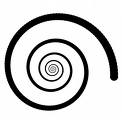
The spiral: the symbol of focus, rotating from periphery to centre.
The spiral: the symbol of focus, rotating from periphery to centre.
But the spider, anxious to acquire, begins at the centre of the web and links up the various strands that radiate from its centre with the same fine silk that he has already created his time structure. Space and time then, according to modern science, have the same origin as the silk of the spider which acts as a creator — using, as we see it, his own version of time and space.
The spider uses the web not only to locate himself but also to interpret its reality in terms of the web being able to trap even more microscopic beings than himself for food. He does this of course by registering vibrations along the web silk patterns from the entrapped creature.
The spider contains within it a working mechanism which makes him a perceiver — a being capable of perception. In other words, and at a higher level, what we call consciousness is the matrix upon which our awareness of the cosmos depends. The structure of the spider’s cosmos is dependent on how he perceives it with his central organ of perception. How he observes what is around him gives it a reality. At the higher level we are still like the spider in that the reality of our universe is dependent on our capacity to perceive it. We have perceptors — including perceptors which we call telescopes — that search outwardly and create our version of what we are perceiving, whether it is galaxies, the big bang, starry firmaments or planetary systems. We as observers create a version of what we are perceiving. This correlates to the scientific proposition that for matter to have any kind of reality, microscopic or macroscopic, it must have an observer.
This introduces the third factor: in order to have an observer we have so far come to the conclusion that the observer must have life. Aristotle said life is a property of matter; we are made of material atoms and molecules which we call the tissues. We have perceptors which we call the five senses and we have a synthesising brain which makes each one of us a perceptor. Apart from the foundational anchoring points of his web the spider is more or less oblivious to the rest of his universe, the forest that he may be living in.
Now let us shift our analogy from the spider’s web to that of the living analogy which we have used frequently in the past to understand microcosmic consciousness in human terms. I refer here to the pygmy living within the depths of some gigantic forest like those existing in the Congo. The pygmy in a lifetime probably does not move more than a mile or so from where he was born in a tiny clearing in which his home exists. If he is to be compared to the spider in the spider’s web then pathways radiate from his home outwardly into the jungle. The jungle itself thus occupied or traversed by his pathways is a universe to him. It feeds him and makes him aware that he is alive.
If I were to take the pygmy to the edge of the forest he would be staggered by what his perceptors are able to observe from that position. He would be able to see in the vast distance great blocks of matter which he would barely be able to comprehend — what we in our superior point of observation call mountains, such as Kilimanjaro and Mt. Kenya.
If he is brought out of his jungle during the winter months he would have the added spectacle of observing the caps of these mountains crowned with glistening white material which we know to be glaciers. Maybe he would want to return quickly to the comfort of his home within the jungle web.
Using the same principle of “As Above so Below” we do the same. Using sophisticated instruments called telescopes and microscopes we perceive the bounds of our own reality — what some of our eggheads call the universe. All very well it all seemed to be, until the beginning of the last century when the first discoveries were made by brave men of science who began to look at structures of pre-physical matter that gave evidence of being the progenitors of a kind of matter that exists in waves and which contradicted most of the known laws of classical physics.
It had to be very brave men like Paul Dirac[4] to take the discovery of quantum energy and pre-physical structures further in the face of the ignorance of almost all mankind, and the opposition of the few scientists who could not heed the discoveries these quantum physicists were making. Never mind the compelling evidence that their experimentation was producing — showing that there was no nonsense about quantum structures, that they were giving every evidence of being real — some scientists still said: “yes, even if you are making these discoveries and providing incontrovertible evidence of them, we still say they are outside of reality because we cannot observe them with the five senses and the brain, and if you can’t observe them they don’t exist in our reality.”
The challenge therefore presents itself to neo-Theosophy[5] to become aware of some of the realities which science cannot describe in its own language but now must resort to the language of our traditional and historical poets, artists, architects, composers and musicians. I remember so well going to visit Sir Bernard Lovell at the Jodrell Bank Observatory with Luia, the Lady Forbes.[6] His observatory was the most modern imaginable and uncovered structures previously not sensed.
Sir Bernard Lovell came with Lady Luia and myself into a stately home where huge living oak trees still provided the supports for the main room, in which there was housed a beautiful baby grand piano. Sir Bernard sat at the piano and played classical music and told us:
“All I have observed in my new fantastic telescope is but the Music of the Spheres.”[7]
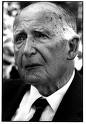
Sir Bernard Lovell (1913–2012), founder of Jodrell Bank Observatory.
Sir Bernard Lovell (1913–2012), founder of Jodrell Bank Observatory.
This illustrates that science has got beyond itself and must now retrace its steps to talk about the macrocosm and the microcosm in terms of “Music of the Spheres” — with statements such as the gene being “selfish,” as if it were living. Bernard Lovell remarked that observing the structure of the universe was as if he was the first human being seeing it for the first time.
Three hundred years ago, the Irish empiricist George Berkeley[8] contributed a particularly prescient observation: the only thing we can perceive are our perceptions. In other words, consciousness is the matrix upon which the cosmos is apprehended. Colour, sound, temperature and the like exist only as perceptions in our head, not as absolute essences. In the broadest sense, we cannot be sure of an outside universe at all.
To recap: our apprehension of colour, sound, temperature and the like exists only as perceptions in our brains, in the form of waves and intuition — so that in reality we can’t be sure in the broadest sense that the universe actually exists at all, because the only part of it that we have observed is what our perceptors have recorded. We should remember here that science readily admits that it has only a grasp of four to six percent of the matter of the universe — the rest of the yardstick being something scientists call mainly dark energy and dark matter.
The models of the universe that exist today are only presumed by us. No wonder Hindu philosophy maintains that humanity is mesmerised by Maya, the Grand Illusion.[9]
When we do set our instruments to observe what lies out in the universe and inside the depths of quantum physics we find some strange effects recorded by the quantum experts — for example, that the results of what we observe depend on whether anyone is observing or measuring them.[10] When someone watches a sub-atomic particle or a bit of light pass through two slits, the particle behaves like a bullet passing through one hole or the other. But if nobody is observing, the particles exhibit the behaviour of a wave that can inhabit all possibilities — including passing through both holes at the same time. There is therefore a difference between the structure and function of an observed universe.
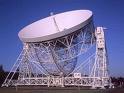
Jodrell Bank Observatory, Cheshire — founded by Sir Bernard Lovell.
Jodrell Bank Observatory, Cheshire — founded by Sir Bernard Lovell.
In a similar way science is resorting to non-scientific language to refer to another phenomenon that is vexing them. Scientists have suddenly discovered that there is a void surrounding the Earth and they don’t know what it is because they haven’t got the instruments to measure it. Theosophists can give a clear answer: the void is mental matter and energy. I know it because I have seen something of it — and I am not a clairvoyant and I have not got a telescope. The void of science, or the mental plane of Theosophy, has been described for centuries in different Hindu ways, and it will have an outer rim to its void which is receptive of the higher form of mental energy which we call Atma, Buddhi and Manas.[11]
The praiseworthy efforts of six thousand physicists stationed at CERN in Switzerland[12] are creating some kind of quantum structure which may well — through the qualities practised by its scientists of abstract thought — act as a planetary organelle bestowing on the Earth a global Antahkarana. This certainly enables me to reverse the ruling which Alice Bailey imposed by saying that the Earth was not a sacred planet. The Earth is a sacred planet — and any other planets that house or operate quantum energies may be called this too.[13]
Matter, life and reality: DB here identifies the three perennial problems of natural philosophy as the entry point for his esoteric synthesis. His argument throughout is that the Ancient Wisdom tradition — specifically the Theosophical principle of “As Above so Below” — offers what scientific materialism cannot: a coherent framework in which matter, life and the observer are understood as aspects of a single reality. ↑
“As Above so Below”: the foundational axiom of Hermetic and esoteric philosophy, attributed to the Emerald Tablet of Hermes Trismegistus. It asserts that the patterns of the cosmos are reflected at every scale, from the galactic to the subatomic — and that studying the microcosm (the spider’s web, the pygmy’s forest, the human horoscope) illuminates the macrocosm. ↑
The twelve cusps: in astrology, the twelve divisions of the horoscope wheel radiating from the central point of the self. DB maps this onto the spider’s radiating silk spokes — seeing in the web an organic model of the astrological framework by which consciousness organises its experience of time and space. ↑
Paul Dirac (1902–1984): British theoretical physicist; one of the founders of quantum mechanics and quantum electrodynamics. Nobel Prize in Physics, 1933. Dirac’s work on the relativistic electron equation predicted the existence of antimatter. DB cites him as an example of the rare scientist courageous enough to follow quantum discoveries beyond the bounds of classical common sense. ↑
Neo-Theosophy: DB’s term for the living, developing tradition of esoteric science that takes up where Blavatsky and Bailey left off — synthesising the Ancient Wisdom with the latest discoveries of quantum physics, neuroscience and cosmology. ↑
Sir Bernard Lovell (1913–2012): British physicist and astronomer; founder and director of Jodrell Bank Observatory, Cheshire — at the time of its construction the largest steerable radio telescope in the world. DB’s personal account of visiting Lovell with Lady Luia Forbes is a characteristic autobiographical aside, here used to illustrate that the greatest scientists ultimately resort to poetic language — the Music of the Spheres — to describe what they observe. ↑
Music of the Spheres: the Pythagorean doctrine that the motions of the celestial bodies produce a cosmic harmony — inaudible to ordinary ears but perceptible to the initiated. That Sir Bernard Lovell, a pre-eminent empirical scientist, spontaneously reached for this phrase to describe his telescope’s findings is, for DB, deeply significant. ↑
George Berkeley (1685–1753): Irish Anglican bishop and philosopher; the principal proponent of idealist empiricism — the view that material objects have no existence independent of being perceived. His dictum esse est percipi (“to be is to be perceived”) anticipates, for DB, both the quantum observer effect and the esoteric teaching that consciousness is the ground of reality. ↑
Maya: Sanskrit, “illusion” — the Hindu philosophical concept that the phenomenal world as perceived by the unenlightened mind is a veil over the deeper reality of Brahman. DB uses it here to support the quantum observer effect: both traditions converge on the view that the apparent solidity of the material universe is a construct of the perceiving consciousness. ↑
The double-slit experiment: one of the most celebrated demonstrations in quantum physics, in which particles (photons, electrons) exhibit wave behaviour — passing through both slits simultaneously — when unobserved, but particle behaviour — passing through one slit only — when observed. The experiment was first performed by Thomas Young in 1801 with light; its quantum implications were established through the twentieth century. ↑
Atma, Buddhi, Manas: the three highest principles of the human constitution in DB’s teaching — spiritual will, spiritual intuition and higher mind respectively. Together they constitute the higher triad or Soul’s own domain. DB here proposes that the “void” surrounding the Earth, which science cannot measure, is mental substance — the matter of the mental plane — with its outer rim receptive to these still higher energies. ↑
CERN: the European Organisation for Nuclear Research, Geneva — the world’s largest particle physics laboratory, housing the Large Hadron Collider. DB’s striking suggestion here is that the collective abstract thought of six thousand physicists working together at CERN may be functioning as a planetary organelle — building, in effect, a global Antahkarana. ↑
The Earth as a sacred planet: Alice Bailey stated that the Earth was not a sacred planet — meaning it had not yet undergone the initiation that elevates a planetary logos to sacred status. DB here reverses this judgement, citing quantum research and the CERN collective as evidence that the Earth has crossed that threshold. ↑
