Amenophis IV / Akhenaten Biography I
(OM 3339 – 3347)
Akhenaten (Amenophis, Amunhotep or Amenhutep IV) B.C. 1353–1335. His strong reliance on the Egyptian priesthood’s veiled initiate teachings is evidenced in his adoption at the beginning of his reign of the post of high-priest of the sun god. This was usually reserved for the kings of Egypt but until then not used in their titles. Akhenaten made sure it was.
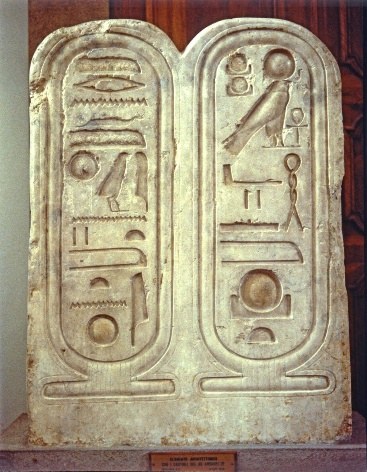
He enforced the name Akhenaten dogmatically – “Aten” meaning “the great disc of the Sun,” and “Akhen” was a shortening of “who rejoiced on the horizon.”[1] Akhenaten changed the two cartouches he had used under his previous name of Amenophis to include the ANKH, symbol of initiate teaching in his life, and the disc of the rising Sun ascending out of a depression on the horizon.
Akhenaten moved his capital city from Karnak to El Amarna, on the Nile to the North where, lo and behold, there was the depression on the horizon as hieroglyphed on the first of his two new cartouches.
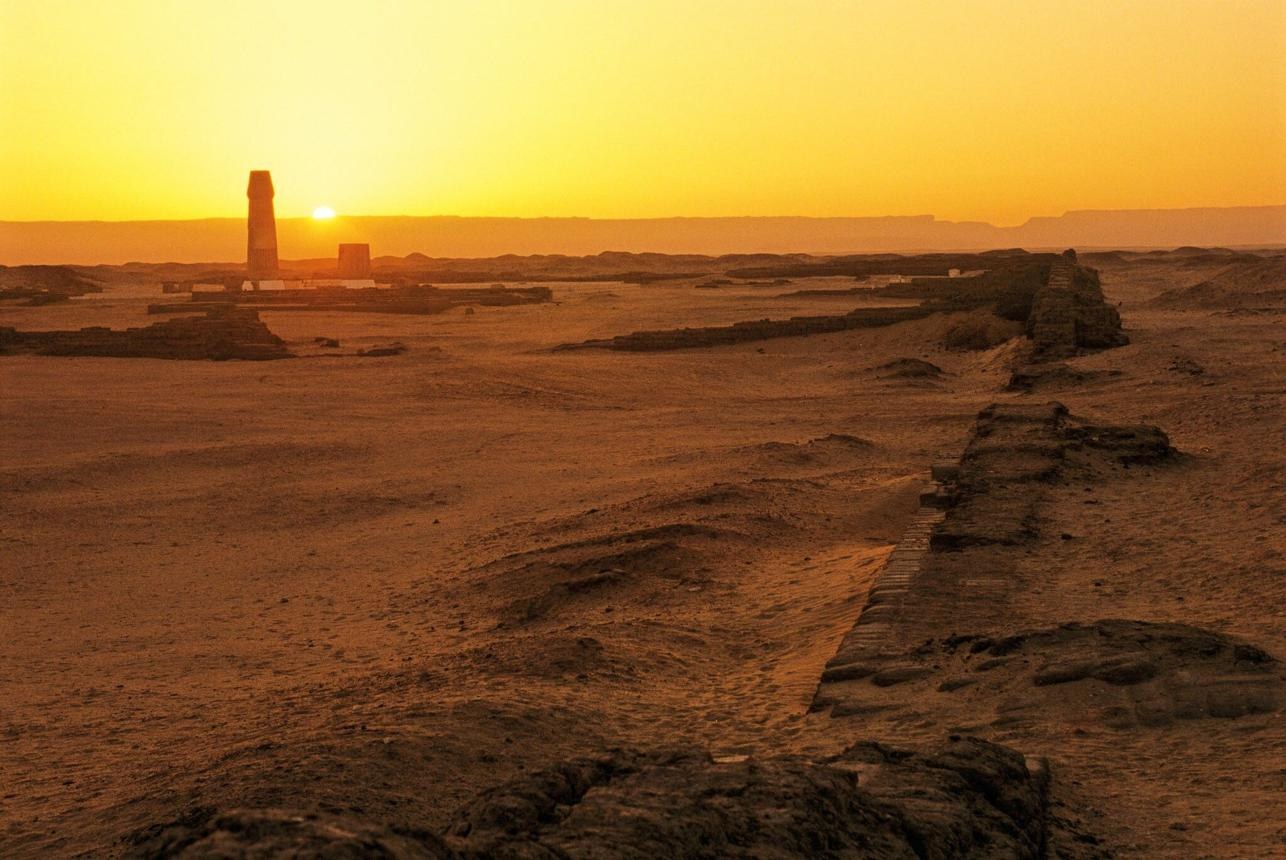
The ANKH – a tall cross with a loop on top of it symbolizing eternal life – often appears in Egyptian personal names like Tutankhamen. It is also called “crux ansate” and “crux ansata” derived from the Egyptian and meaning key of life, soul. The ankh was carried by the Egyptian priests and was supposed to be the key to the mysteries, the inner sanctum of the soul and the hieroglyph for life.
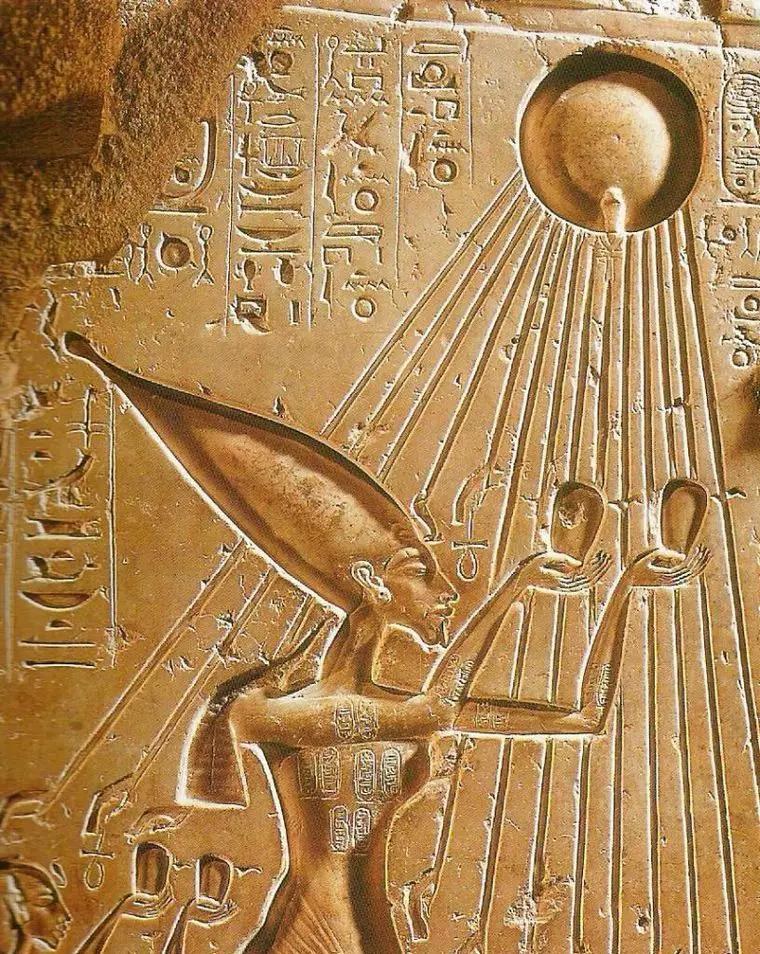
Based on his esoteric initiate knowledge Akhenaten represented the image of the sun-god as being behind the disc of the sun which through its rays handed out the gifts of life to beings on Earth and in particular the ANKH is put into the hand of the pharaoh (and his family).
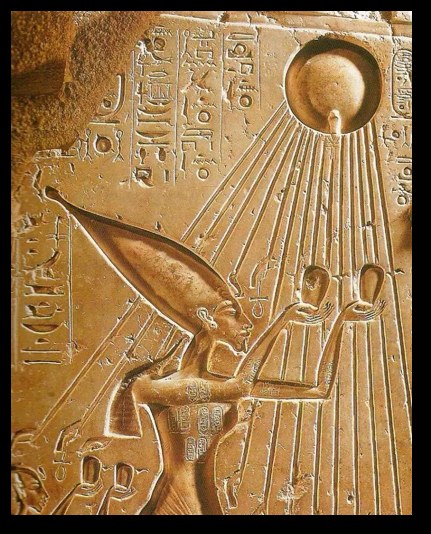
Akhenaten’s obsession with the sun god isolated the priests of Egypt’s remaining gods and the whole priesthood with its animal icons. This was precisely what Akhenaten desired because he was convinced his was the only god, the one behind the disc of the sun. This was the birth of a monotheistic concept that was, in succeeding generations, to have global effects, giving birth to the three great religions.
A close study of the colour picture reveals the serpent of wisdom erect and poised within the orb of the sun but behind its disc. This is a mirror image of the seated cobra on the headdress of Akhenaten himself, a symbol of power and of focus. Note also the sheltered eyes of the pharaoh as he gazes into the level sun before him.
To secure his monotheistic ideal, Akhenaten established what he hoped would be a centre of culture and spiritual determinism[2] that would not be eroded by any kindred priesthood. But it was not yet to be. Soon after his death the old religion, propped up with animal archetypes, swept away everything that smacked of monotheism.
Not long after his death even the faces of Akhenaten and his wife Nefertiti were obliterated on their images and statues. Nevertheless, the scintillating qualities of his flirtation with the sun persisted in the era of his son, Tutankhamun, and succeeding generations. More importantly, the initiate knowledge given to Akhenaten persisted deep within the extant priesthood to surface two hundred years later[3] with its special recondite effects to enlighten receptive folk close to the pharaoh Rameses II.
Egyptologists usually translate the name Akhenaten as “effective for the Aten” or “living spirit of the Aten.” ↑
Spiritual determinism implies an inner causation, independent of the personal human will but manifesting outwardly in physical effects – hence the concept of the deity behind the effects of the sun. (Dr. Baker’s own note.) ↑
Ramesses II reigned c. 1279–1213 B.C., roughly sixty to seventy-five years after Akhenaten’s death rather than two hundred. ↑
